What changes when you own your education platform
Data, brand, margins and control: what you gain (and what you take on) when you leave the marketplaces.
 Teducas team
, 6 min read
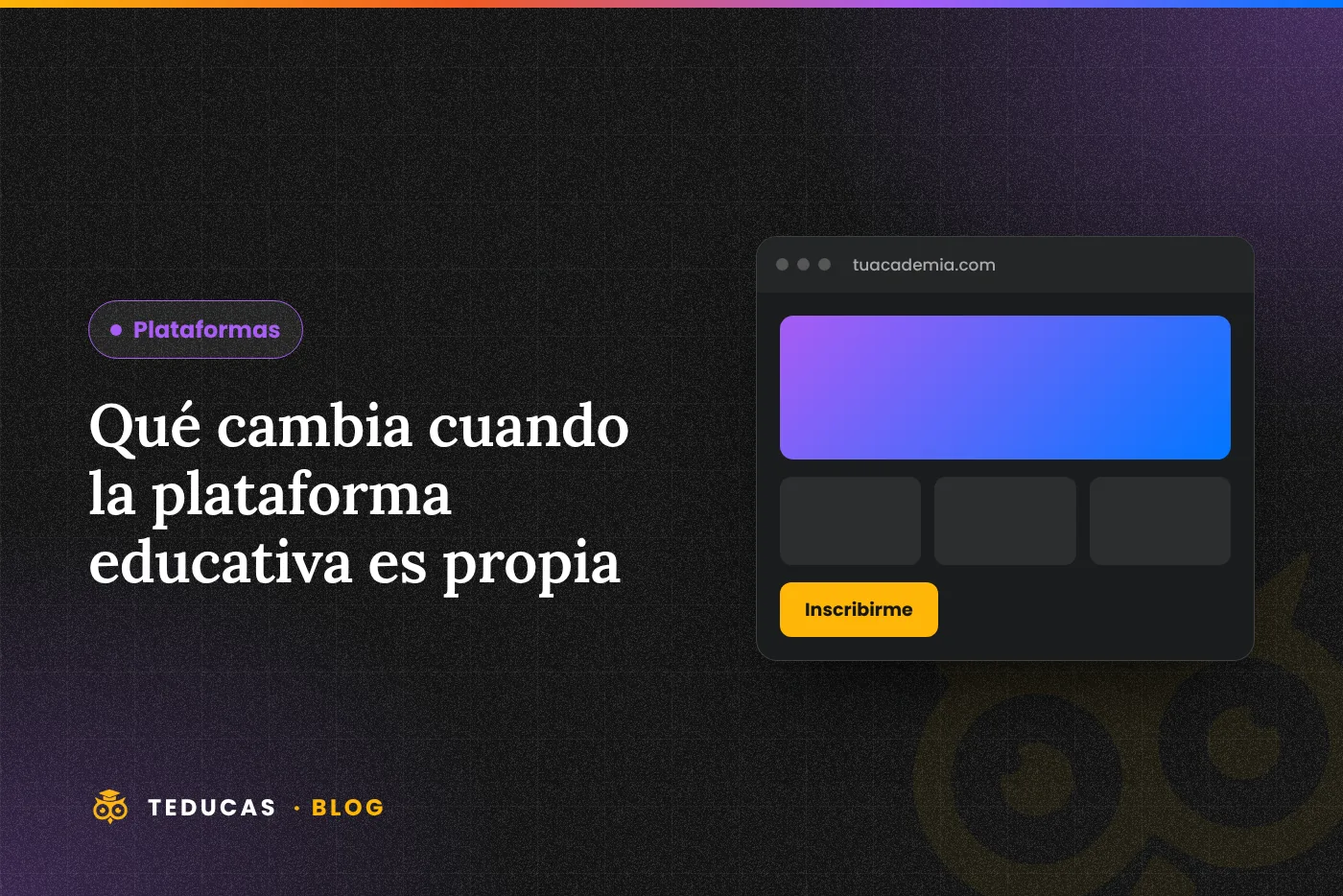
Selling courses on a marketplace is a good way to start: the traffic is already there and you don't have to worry about technology. But there comes a point where the marketplace's rules start to limit your business. These are the real differences of owning your platform.
Your students' data is yours
On your own platform you know who bought, which lessons they finished and where they dropped off. With that information you can improve the course, offer the next step to the right student and build a list that doesn't depend on any algorithm.
You set prices and offers
Bundles, memberships, installment payments, coupons for companies, time-limited access: on your own platform all of this can be configured. On a marketplace, pricing and promotions are usually restricted.
Your brand is the one people remember
Students land on your domain, see your brand and receive emails with your name. That turns into repeat purchases and referrals that come to you, not to a third-party platform.
What you take on
Owning your platform also comes with responsibilities:
- Traffic: you have to attract your students with content, community or advertising.
- Maintenance: updates, security and backups.
- Support: someone has to answer when a student can't log in.
That's why we recommend taking the step once you have a validated offer and at least one acquisition channel working. If you're at that point, see how we handle EduTech implementation.